Quick Answers at a Glance
Scan below for the short answer to each question, then read the full section for the nuance and conditions that determine whether it applies to your specific lawn.
Can I Aerate My Lawn in the Summer? (Can You Aerate Lawn in Summer?)
This is one of the most searched lawn care questions online, and it gets a frustratingly vague answer on most sites. The clear answer is: it depends on your grass type, and the two categories are completely opposite.
Summer Aeration for Warm-Season Grasses: Ideal
If your lawn is bermudagrass, zoysiagrass, St. Augustine, centipedegrass, or buffalograss, then late spring to early summer (May through July) is actually the best time to aerate — not a compromise. These warm-season grasses grow most vigorously during summer heat, which means they recover fastest from aeration disturbance. The holes close within 2–4 weeks, root growth into the new channels is vigorous, and the overall turf improvement from summer aeration on warm-season grass is significant. Aerating warm-season grass in fall or spring is actually the mistake to avoid.
Summer Aeration for Cool-Season Grasses: Avoid
If your lawn is Kentucky bluegrass, tall fescue, perennial ryegrass, or fine fescue, summer aeration is a poor choice that ranges from ineffective to actively harmful depending on how stressed the lawn is. Cool-season grasses slow their growth significantly in summer heat and enter a partial dormancy during hot, dry weather. An aerated cool-season lawn in July faces: exposed root tissue that desiccates in heat, open holes that become entry points for summer weeds, and a grass plant with insufficient energy reserves to mount the recovery response that makes aeration worthwhile. The result is all the disruption with none of the benefit.
| Grass Type | Category | Summer Aeration? | Best Window Instead |
|---|---|---|---|
| Bermudagrass | Warm-Season | ✓ Yes — ideal | Late May – July |
| Zoysiagrass | Warm-Season | ✓ Yes — ideal | Late May – July |
| St. Augustine | Warm-Season | ✓ Yes — ideal | Late May – July |
| Centipedegrass | Warm-Season | ✓ Yes (lightly) | Late May – June |
| Kentucky Bluegrass | Cool-Season | ✗ Avoid | Late Aug – Oct |
| Tall Fescue | Cool-Season | ✗ Avoid | Late Aug – Oct |
| Perennial Ryegrass | Cool-Season | ✗ Avoid | Late Aug – Oct |
| Fine Fescue | Cool-Season | ✗ Avoid | Late Aug – Oct |
The simplest clue: does your lawn go brown and dormant in winter (warm-season) or in midsummer heat (cool-season)? Warm-season grass is brown in winter and green in summer. Cool-season grass is lush in spring and fall, and may brown in summer drought. Our guide to lawn grass types helps with precise identification.
For a deep dive into all the benefits aeration delivers when done at the right time, our complete guide to lawn aeration benefits covers what to expect from properly timed core aeration.
Can You Fertilize Your Lawn in the Summer?
Like aeration, summer fertilization is appropriate for some lawns and counterproductive for others. The critical variable, again, is grass type.
Warm-Season Grasses: Summer Is Prime Fertilizing Time
Bermudagrass, zoysia, St. Augustine, and centipede grow most actively from late spring through summer. These grasses actively take up nitrogen during warm months and respond visibly to summer fertilization with deep green color, vigorous growth, and enhanced density. A typical warm-season fertilization schedule includes applications in late spring, midsummer, and early fall — with summer being the most impactful window.
Apply a balanced or nitrogen-focused fertilizer in June–July for warm-season lawns, ensuring the lawn is not drought-stressed at the time of application (always water before and after fertilizing in summer).
Cool-Season Grasses: Proceed with Caution in Summer
Cool-season grasses slow significantly in summer heat. Applying high-nitrogen fertilizer to a heat-stressed cool-season lawn causes several problems:
- Fertilizer burn risk increases — stressed grass absorbs nutrients poorly and surface nitrogen concentrations can damage crown tissue
- Forced top growth during heat stress — nitrogen stimulates leafy growth at exactly the time the plant is trying to conserve energy; this soft new growth is highly susceptible to heat damage and disease
- Increased disease susceptibility — particularly brown patch fungus, which thrives on succulent summer growth in heat and humidity
The guideline for cool-season lawns: a light application of slow-release fertilizer in late spring (May–early June) is acceptable; heavy or quick-release nitrogen in July and August is not. If your cool-season lawn is struggling in summer heat, water and shade management will help far more than fertilizer. Our guide on summer lawn maintenance tips covers the complete cool-season summer care programme.
As a practical guideline: avoid fertilizing cool-season grasses when daytime temperatures are consistently above 85°F (29°C). At these temperatures, the burn risk climbs significantly and the grass is in survival mode rather than growth mode. Resume fertilizing in September when temperatures moderate.
Can I Fertilize My Lawn Every 4 Weeks?
The appeal of fertilizing every 4 weeks is understandable — more food means greener grass, right? In practice, the math works very differently. Grass plants don’t continuously absorb whatever nitrogen you apply. They take up what they need for current growth, and excess nitrogen either accumulates to toxic concentrations at the root zone, leaches into groundwater, or sits on the surface where it can burn leaf tissue.
Why Every 4 Weeks Is Too Often (for Synthetic Fertilizers)
- Fertilizer burn risk — synthetic nitrogen applied before the previous application is fully used creates high-nitrogen soil conditions that dehydrate roots through osmosis
- Excessive top growth and thatch — overstimulated grass produces leaf tissue faster than it can naturally break down, building a thatch layer that impedes water and air penetration
- Nutrient imbalance — repeatedly applying high-nitrogen products depletes other soil nutrients (potassium, phosphorus, micronutrients) that aren’t being replaced at the same rate
- Environmental runoff — excess nitrogen leaches into groundwater and can run off into waterways, contributing to algal blooms
Recommended Fertilization Frequency by Grass Type
| Grass Type | Applications per Year | Interval Between Apps | Best Timing |
|---|---|---|---|
| Kentucky Bluegrass | 3–4 | 6–8 weeks (growing season) | Spring, Early Summer, Fall (x2) |
| Tall Fescue | 2–3 | 8–10 weeks | Early Fall (main), Spring (light) |
| Perennial Ryegrass | 3–4 | 6–8 weeks | Spring, Summer, Fall (x2) |
| Bermudagrass | 4–6 | 4–6 weeks (growing season only) | Late Spring through Late Summer |
| Zoysia | 2–3 | 6–8 weeks | Late Spring, Midsummer, Early Fall |
| St. Augustine | 3–4 | 6–8 weeks | Spring through Late Summer |
| Centipede | 1–2 | Once in spring, once in summer | Low-input — over-fertilizing causes decline |
The One Exception: Slow-Release Organic Fertilizers
If you’re using a slow-release organic fertilizer like Milorganite, iron-based organics, or compost-based products, applications every 4–6 weeks are far less risky. These products release nitrogen gradually as soil microbes break down organic material, creating a steady low-level nutrient supply rather than the nitrogen spike of synthetic products. Milorganite applied every 6 weeks through the growing season is a common and effective programme for many homeowners. For a full comparison of fertilizer types, our guide on slow-release vs. quick-release lawn fertilizers explains the difference in depth.
Regardless of timing, never apply fertilizer to a lawn that is visibly drought-stressed (footprints remain, grass is blue-grey or brown). Stressed grass cannot metabolise fertilizer effectively and burn risk skyrockets. Water thoroughly 24–48 hours before fertilizing and always water in after application.
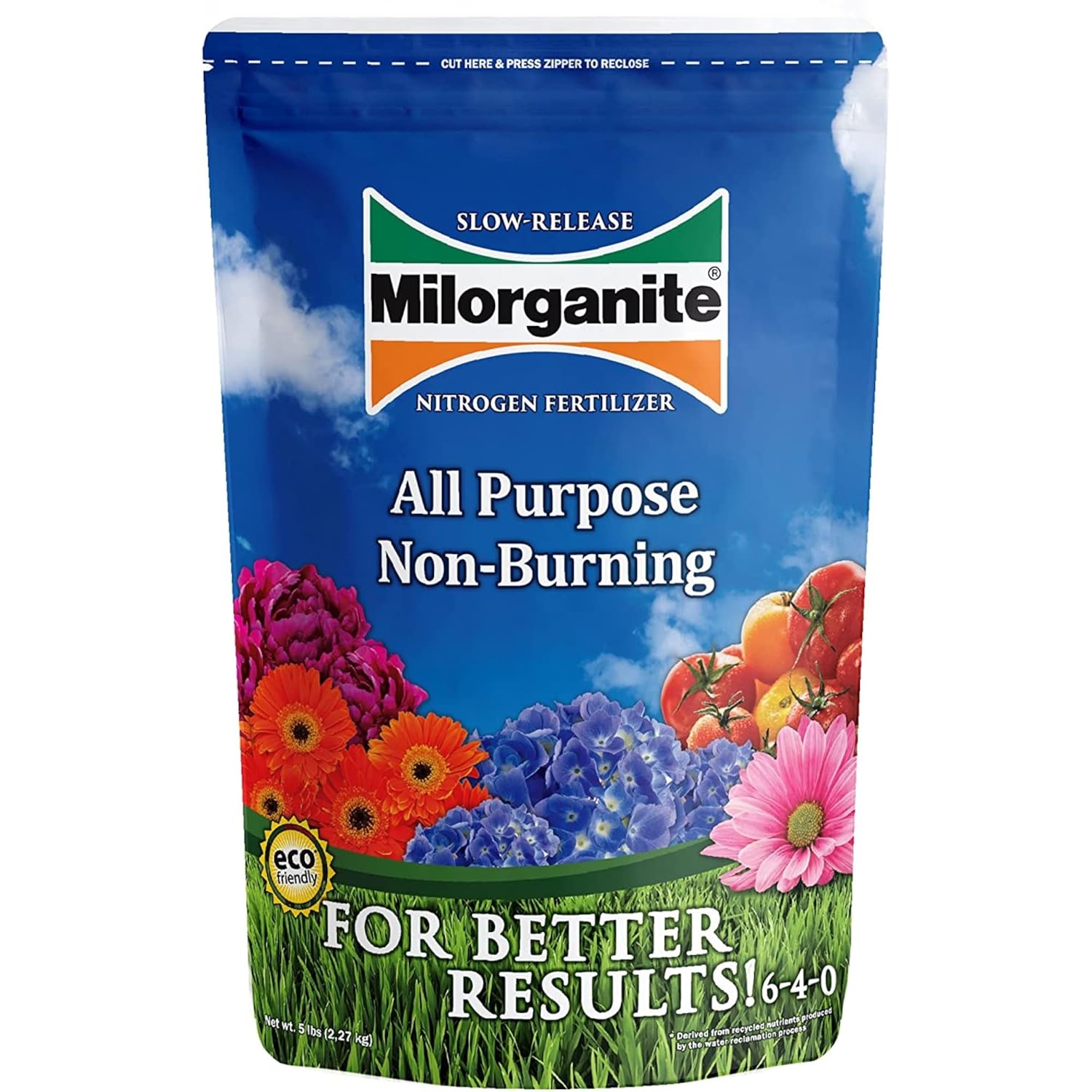
Milorganite Slow-Release Nitrogen Fertilizer
The safest fertilizer for lawns prone to burn. Organic, slow-release nitrogen that feeds for up to 10 weeks with virtually zero burn risk at any application rate. Safe for all grass types, pets, and waterways.
🛒 View on AmazonCan I Use Topsoil to Level My Lawn?
Using topsoil to level a lawn — filling in low spots, correcting surface irregularities, and gradually improving grade — is a legitimate and effective technique when done correctly. The method is called topdressing, and the key word is “gradual.” The primary mistake homeowners make is applying topsoil too thickly, smothering the existing grass beneath a layer it can’t grow through.
The ½-Inch Rule: Why It Matters
Grass plants breathe, photosynthesize, and conduct cellular processes through their leaf blades. Bury those blades completely under a thick layer of topsoil and the plant suffocates — particularly in hot, moist conditions where the buried tissue quickly rots. The safe maximum per application is approximately ½ inch (12mm) of topdressing material — enough to visibly fill and level minor depressions, but shallow enough that the existing grass blades can grow through within 1–2 weeks.
For deeper depressions (more than an inch), use the lift-and-fill method: cut a cross through the depression with a spade, peel back the sod flaps, add fill material underneath, and replace the sod on top. This avoids burying the grass entirely.
Topsoil vs. Topdressing Mix: What to Use
| Material | Leveling Effect | Risk of Compaction | Soil Health Benefit | Best For |
|---|---|---|---|---|
| Topsoil + Sand Mix (50/50) | Very Good | Low | Moderate | General leveling on all soil types |
| Pure Topsoil | Good | Medium-High | Low-Moderate | Sandy soils needing organic addition |
| Compost-Sand Mix | Good | Low | High | Improving soil biology + leveling |
| Pure Sand | Excellent | Very Low | None | Golf turf, drainage improvement |
| Pure Compost | Moderate | Low | Very High | Soil improvement on existing grade |
Step-by-Step: Topdressing for Lawn Leveling
- Mow the lawn short — cut to the lowest safe height for your grass type before topdressing so the existing blades have maximum exposure above the new material layer.
- Aerate first if compaction is present — aerating before topdressing opens the soil profile and allows the topdressing material to work into the existing soil more effectively.
- Apply topdressing material at no more than ½ inch depth — use a shovel and lawn spreader or a dedicated topdresser. Spread evenly across the area, concentrating on low spots.
- Work it into the grass with a leveling rake — use a lute or wide drag rake to work the material down to the soil surface and around the grass blades, not over the top of them.
- Water thoroughly — irrigation settles the material and ensures it makes contact with the soil below.
- Repeat in 4–6 weeks if needed — for deeper depressions, multiple thin applications over several months achieve safe leveling without smothering the grass.
For a full walk-through of lawn leveling and grading, our detailed guide on how to level a bumpy lawn with soil prep and grading techniques covers every method from topdressing to full regrading. For pure compost topdressing, see our guide on how to topdress your lawn with compost.
Can Milorganite Burn Your Lawn?
Milorganite is an organic slow-release fertilizer made from heat-dried microbes from the Milwaukee Metropolitan Sewerage District’s water treatment process. It carries a 6-4-0 NPK ratio with 85% of its nitrogen in a slow-release organic form. The question of whether it burns lawns is understandable given how common fertilizer burn is with synthetic products — but Milorganite operates on a fundamentally different mechanism that makes burn essentially a non-issue at normal application rates.
Why Milorganite Doesn’t Burn
Standard synthetic fertilizers burn lawns through a process of osmotic dehydration: high soluble nitrogen concentrations near roots draw water out of plant cells, essentially dehydrating the grass from the roots up. This is why synthetic products must be applied carefully, watered in promptly, and never applied to drought-stressed turf.
Milorganite’s nitrogen is bound in organic compounds that must be broken down by soil microbes before the nitrogen becomes available to plant roots. This microbial breakdown process is gradual — taking weeks rather than hours — meaning the nitrogen is released slowly and continuously, never creating the high-concentration spike that causes burn. The soil bacteria do the work, and they do it at a pace the grass can comfortably absorb.
Circumstances That Can Cause Milorganite Discolouration
While true burn is very rare, Milorganite can cause cosmetic issues under specific unusual circumstances:
- Massive over-application — applying 5–10x the label rate creates organic matter accumulation that can temporarily discolor or mat the grass. At label rate (32 lbs per 2,500 sq ft), this is not a risk.
- Application during severe drought — even organic nitrogen can become slightly concentrated at the soil surface when there is no moisture to work it in. Water after application regardless of rain forecast.
- High-iron staining on surfaces — Milorganite has a high iron content that can stain concrete, pavers, and other hardscaping. Sweep off any granules from hard surfaces immediately after application.
The standard rate is 32 lbs per 2,500 sq ft applied every 8–10 weeks during the growing season — approximately 4 applications per year for cool-season grasses, 5 for warm-season. Even doubling this rate is unlikely to cause burn, making Milorganite the ideal fertilizer for nervous first-time lawn carers or those with pets that frequently graze on grass. Our full review of Milorganite’s nutrient profile and results covers real-world performance data.
Can You Over-Lime a Lawn?
Over-liming is a genuinely damaging and surprisingly common mistake — often made by homeowners who correctly identify acidic soil and then apply lime without a soil test, simply adding it year after year “just to be safe.” Lime is not a harmless supplement. It is a soil pH modifier, and applying it in excess shifts soil pH above the range where grass can access the nutrients it needs, no matter how much fertilizer you apply.
What Happens When You Over-Lime
Most lawn grasses thrive at soil pH between 6.0 and 7.0. When pH rises above 7.5 (strongly alkaline), several critical micronutrients become chemically unavailable to grass roots even if they are physically present in the soil. The specific deficiencies caused by high pH include:
- Iron deficiency (interveinal chlorosis) — grass blades turn yellow between the veins while the veins remain green, creating a distinctive striped appearance
- Manganese deficiency — similar to iron deficiency; yellowing, poor growth
- Boron and zinc deficiency — slower to manifest but causes poor root development and reduced stress tolerance
The frustrating reality of over-limed lawns: the turf looks deficient and unhealthy, the homeowner applies more fertilizer, but the problem doesn’t improve — because it’s a pH problem, not a nutrient shortage. No amount of nitrogen or iron spray fixes an over-limed soil until the pH is brought back into range.
How to Fix an Over-Limed Lawn
- Soil test first — confirm the pH before taking any action. A pH above 7.5 with yellowing turf is diagnostic of over-liming. Test at multiple locations across the affected area.
- Apply elemental sulfur — sulfur is the most reliable and effective acidifier for over-limed lawns. Application rates depend on how far above 7.0 your pH is and your soil type (clay soils need more sulfur to shift the same amount as sandy soils).
- Apply acidifying fertilizer — ammonium sulfate-based fertilizers have an acidifying effect alongside their nitrogen contribution. Use these as part of the recovery programme.
- Stop all lime applications — obviously, adding more lime while trying to lower pH is counterproductive. Halt lime applications and retest every 3–4 months to track progress.
- Apply chelated iron — while pH correction takes effect (which can take 6–12 months), chelated iron spray applied as a foliar treatment improves grass colour by bypassing the pH-mediated uptake restriction. This is a cosmetic fix, not a cure, but it keeps the lawn looking presentable during recovery.
This is the root cause of virtually every over-liming problem. If you haven’t tested your soil pH, you have no idea whether your lawn actually needs lime at all. Most extension services and garden centres sell soil test kits for under $20, and university extension services offer mail-in testing for $10–$15. Invest in the test and apply only what your specific pH deficit requires. Our guide on step-by-step soil pH testing walks you through the process.

Luster Leaf Rapitest Soil pH Meter
Before liming, fertilizing, or topdressing — test your soil pH. This digital meter gives accurate results in seconds. Eliminates the guesswork that leads to over-liming and nutrient lockout. Under $20.
🛒 View on AmazonCan You Overwater a New Lawn?
The instinct to water a newly seeded or sodded lawn heavily and frequently comes from a good place — you want the grass to establish and you know it needs moisture. But there’s a critical distinction between keeping establishment conditions right and creating the waterlogged conditions that actively prevent establishment. Getting this wrong is one of the most common causes of patchy, thin, or failed new lawn projects.
Overwatering a Newly Seeded Lawn
New grass seed needs consistent moisture in the top inch of soil to germinate — but moisture and saturation are very different things. Here’s what overwatering does to germinating seed:
- Seeds wash away — excess irrigation creates surface runoff that physically moves seeds from where they were placed, creating bare patches in low spots and seed-dense accumulations in others
- Anaerobic germination conditions — saturated soil lacks the oxygen that germinating seeds need; seeds sitting in waterlogged conditions rot rather than sprout
- Damping off fungal disease — the damp, warm conditions of an over-irrigated seedbed are ideal for Pythium and other damping-off fungi that kill seedlings at the soil surface just after germination
- Crust formation on drying — alternating heavy watering and surface drying can create a soil crust that seedlings cannot push through
Correct Watering for New Seed
| Stage | Goal | Frequency | Amount |
|---|---|---|---|
| Pre-germination (Days 1–14) | Keep top 1″ consistently moist | 2–3 times daily | Light — ⅛ to ¼ inch per session |
| Germination (Days 7–21) | Maintain moisture; don’t waterlog | 1–2 times daily | Light — ¼ inch per session |
| Early establishment (Days 21–45) | Encourage roots deeper | Every other day | Moderate — ½ inch per session |
| After first mow | Transition to mature watering pattern | 2–3 times per week | Deep — ¾ to 1 inch per session |
Overwatering Newly Installed Sod
New sod faces a different overwatering risk. The sod itself arrives already growing and is placed on prepared soil with a goal of establishing root contact and downward root growth. Overwatering new sod:
- Creates root rot — sod roots in constantly saturated soil begin to rot rather than penetrating downward into the prepared base
- Prevents downward root establishment — sod roots grow into the prepared soil below because they’re seeking moisture. Keep the soil below the sod consistently but not excessively moist to encourage this downward growth
- Causes fungal disease — persistently wet sod surfaces are susceptible to Pythium blight and other turf diseases
The test for new sod moisture is straightforward: lift a corner of a piece of sod and feel the soil beneath. It should be moist and cool — if water squeezes out when you press it, it’s too wet. If it’s dry and powdery, it needs water.
If your new lawn has a consistently spongy feel when you walk on it, water is pooling at the soil surface, or you notice yellowing with no drought stress, you’re likely overwatering. Cut irrigation frequency in half for 48 hours and reassess. A healthy new lawn should feel firm and moist — not soggy. Our guide on signs of an overwatered lawn provides the full diagnostic checklist for established and new lawns.
Can You Use an Electric Lawn Mower on Wet Grass?
This question comes up frequently with the growth of battery-powered electric mowers, and the answer has evolved somewhat as mower technology has improved. The short version: modern cordless battery mowers are designed with sealed electrical components that make them physically safe to use in light moisture, but the result — the actual quality of cut — is poor in wet conditions regardless of the mower’s electrical safety profile.
The Safety Concern: Corded vs. Battery Mowers
The electrical safety picture differs significantly between corded and battery-powered electric mowers:
Battery Mowers — Lower Risk
- Sealed lithium-ion battery packs
- Waterproof motor housings on quality brands
- No extension cord = no exposed connection points
- Modern units designed for outdoor conditions
- Low-voltage DC system (safer than AC mains)
Corded Mowers — Higher Risk
- Mains voltage running through outdoor extension cord
- Water at cord connections is genuine shock risk
- Any cord damage + wet conditions = hazard
- Older models may lack modern sealing
- Not recommended on wet grass under any circumstances
Why Cut Quality Suffers on Wet Grass — Regardless of Mower Type
Even if your battery mower is technically safe to run on damp grass, the quality of what you produce will be noticeably inferior to mowing dry grass:
- Wet grass bends rather than stands up — grass blades wet with dew or rain lean over rather than standing upright under the deck, causing uneven cutting heights and a ragged, torn appearance rather than a clean slice
- Clippings clump and clog — wet clippings stick together and to the mower deck, discharge chute, and collection bag, causing clogs that require frequent stops to clear. Dense clumps of wet clippings left on the lawn can smother the grass beneath
- Discharge and mulching are impaired — electric mulching mowers struggle particularly badly with wet clippings as the moist, dense material doesn’t break down efficiently in the deck
- Rutting and compaction — mowing on waterlogged soil creates wheel ruts and soil compaction from the mower’s weight on softened ground
- Disease spread — a wet, torn grass surface is significantly more susceptible to fungal diseases than a clean dry cut
The Practical Guidelines
| Condition | Corded Electric Mower | Battery Electric Mower | Gas Mower |
|---|---|---|---|
| Light morning dew | ✗ Avoid | ~ Possible, poor quality | ~ Possible, reduced quality |
| Wet grass after rain (2–4 hrs) | ✗ Avoid | ✗ Not recommended | ~ Possible but messy |
| Saturated lawn (standing water) | ✗ Never | ✗ Never | ✗ Never |
| Dry grass, slight moisture underfoot | ~ Use caution | ✓ Acceptable | ✓ Normal |
| Fully dry conditions | ✓ Ideal | ✓ Ideal | ✓ Ideal |
If circumstances require mowing in damp conditions with a battery mower: raise the cutting height by one setting (cutting less = less clogging), mow more slowly to give the deck time to clear clippings, stop frequently to clear the discharge chute, and avoid the collection bag (side-discharge is better in wet conditions). Clean the underside of the deck thoroughly after finishing. Never mow with a corded electric mower in any wet conditions.
For a deeper look at how electric mowers compare in performance across different conditions, our electric vs. gas mower comparison covers power, torque, and runtime in real-world scenarios.

EGO Power+ 21″ Self-Propelled Electric Mower
The best-reviewed battery mower for all-condition performance. Weather-resistant sealed deck and motor housing. Handles light moisture better than any other battery mower in its class. But dry grass always wins.
🛒 View on AmazonFrequently Asked Questions
It depends on your grass type. For warm-season grasses (bermudagrass, zoysia, St. Augustine), summer aeration (May–July) is actually the ideal window — these grasses are in peak growth and recover rapidly. For cool-season grasses (Kentucky bluegrass, tall fescue, ryegrass), summer aeration is not recommended — heat stress prevents proper recovery. Always match aeration timing to your grass’s active growing season, not just the calendar.
For most lawns using synthetic fertilizers, every 4 weeks is too frequent. Standard guidance is 6–8 weeks between applications for cool-season grasses and 4–6 weeks for bermudagrass during its peak growing season. Over-fertilizing causes burn, excessive thatch, and environmental runoff. If you want more frequent feeding, use a slow-release organic fertilizer like Milorganite, which carries much lower burn risk and can be applied every 6 weeks without issue.
Yes, with the critical rule that you apply no more than ½ inch at a time. Topsoil applied too thickly smothers the existing grass. For best results, use a 50/50 mix of topsoil and coarse sand rather than pure topsoil, which can compact and create a hardpan layer. For depressions deeper than 1 inch, use the lift-and-fill method (cut and peel back the sod, add fill underneath, replace the sod) rather than smothering with surface material.
Milorganite is one of the safest fertilizers available and is extremely unlikely to burn lawns at label application rates. Its slow-release organic nitrogen is released gradually by soil microbes, eliminating the nitrogen spike that causes burn in synthetic fertilizers. At the standard rate of 32 lbs per 2,500 sq ft, burn is essentially not a risk. Even doubling the rate is unlikely to cause visible damage, making Milorganite ideal for first-time lawn carers and households with pets.
Yes, and it’s a genuinely damaging problem. Excess lime raises soil pH above 7.5, causing iron, manganese, and boron deficiencies through nutrient lockout — the turf yellows despite adequate fertilization. Recovery requires applying elemental sulfur to re-acidify the soil, which takes months. The solution is to always soil-test before applying lime and apply only what your specific pH deficit requires. Never apply lime as a routine annual treatment without testing.
Yes — this is one of the most common new lawn establishment mistakes. For new seed, overwatering causes seeds to wash away, creates anaerobic conditions that prevent germination, and promotes damping-off fungal disease. For new sod, overwatering causes root rot and prevents the roots from establishing downward into the prepared soil. The correct approach is to keep the seed zone or sod consistently moist but never waterlogged — light, frequent watering during germination, transitioning to deeper, less frequent watering as the lawn establishes.
Modern battery-powered mowers are electrically safer on damp grass than older corded models, but the cut quality is poor regardless of the mower type. Wet grass bends rather than standing upright, producing uneven cuts. Wet clippings clump, clog the deck and discharge chute, and can smother the lawn if left in dense piles. Mowing on saturated soil also causes rutting and compaction. Corded electric mowers should never be used on wet grass due to shock risk. Wait for the grass to dry before mowing for the best results from any type of mower.
For warm-season grasses (bermuda, zoysia, St. Augustine), summer is the primary fertilization window — these grasses are in peak growth and actively use nitrogen during warm months. For cool-season grasses (bluegrass, tall fescue, fescues), summer fertilization should be avoided during peak heat (above 85°F). A light application of slow-release fertilizer in early summer is acceptable for cool-season lawns; heavy nitrogen applications in July and August cause burn risk, disease susceptibility, and excessive soft growth that suffers in heat.
Same answer as “can I aerate my lawn in summer” — it depends on grass type. Warm-season grasses: summer aeration is ideal (late May–July). Cool-season grasses: avoid summer aeration — the grass is stressed and cannot recover properly. The rule is straightforward: aerate during the grass’s peak active growth period. That’s summer for warm-season grass and late summer/fall for cool-season grass.
Yes. Overwatering an established lawn creates persistently soggy soil, encourages shallow rooting (roots don’t need to grow deep when water is always at the surface), promotes fungal diseases, and wastes water. Most established lawns need 1 to 1.5 inches of water per week from all sources. Water deeply but infrequently — twice weekly in summer is typically sufficient. Signs of overwatering include yellowing despite adequate fertilization, a spongy feel underfoot, visible fungal patches, and water pooling after irrigation. Our guide on signs of an overwatered lawn covers the full diagnostic checklist.
Conclusion: The Right Answer Usually Depends on Your Grass Type
Looking back at these 10 questions, a pattern emerges: many of the “can you…?” answers hinge on grass type. Summer aeration and summer fertilization are good for warm-season grasses and bad for cool-season grasses. Knowing whether you have bermudagrass or Kentucky bluegrass — zoysiagrass or tall fescue — is the single piece of information that unlocks the right answer to more lawn questions than anything else.
The other consistent thread is the danger of excess: too much fertilizer, too much lime, too much water, and fertilizing too frequently all cause more harm than the problem they’re trying to solve. Lawn care works best when it’s calibrated to what the grass actually needs rather than applying more of everything in hopes of a better result. A soil test before liming, a moisture check before watering, and a label rate check before fertilizing are the three simple habits that prevent the most common and costly lawn care mistakes.
For a complete foundation of lawn care knowledge that connects all of these topics into a coherent annual programme, start with our lawn care 101 guide — the most comprehensive free lawn care resource we publish.
🌿 Start with Lawn Care 101 →