Ryobi Lawn Mower Review: Are The Green Machines Worth The Hype?
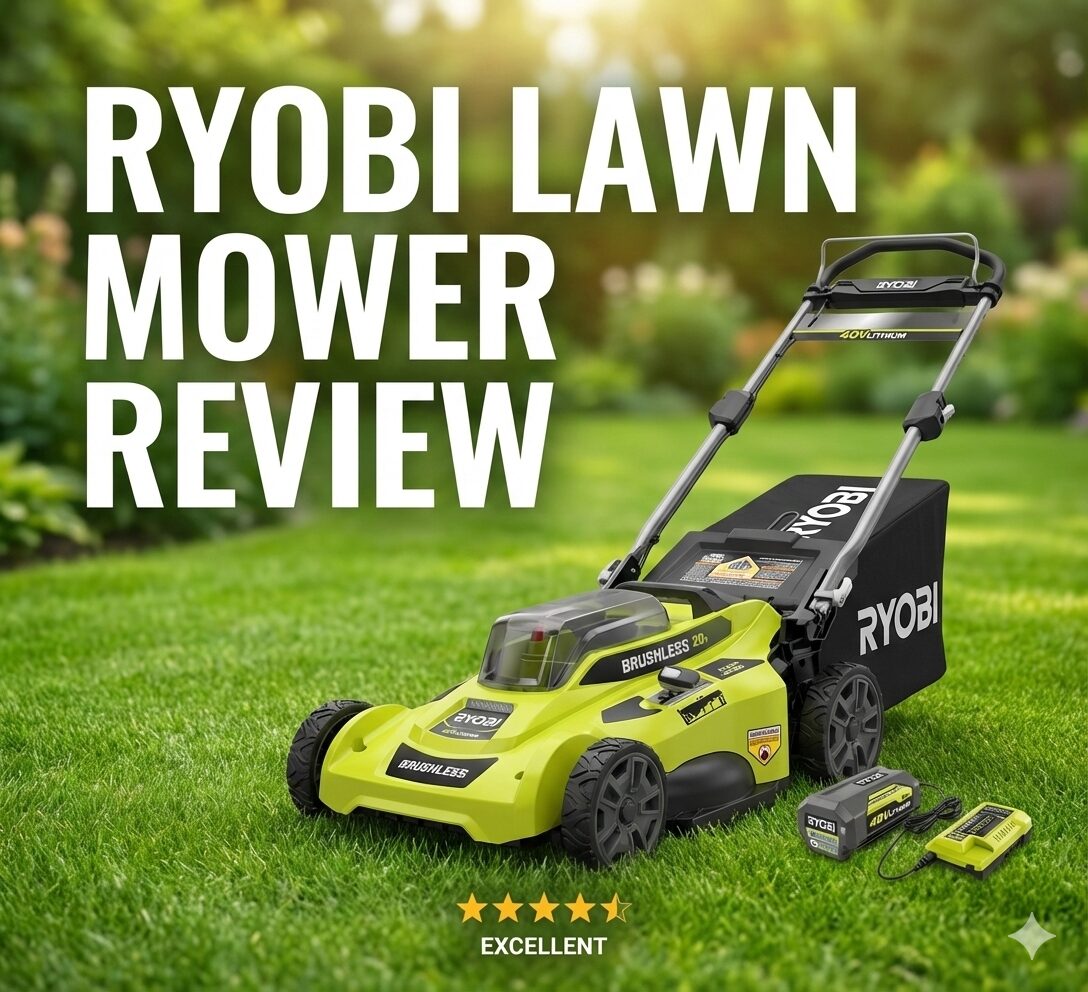
The transition from gas to electric lawn care has been swift, and few brands have pushed this revolution as aggressively as Ryobi. Walking into a Home Depot, you are immediately greeted by a wall of neon green tools. But when it comes to maintaining a pristine lawn, does this battery-powered giant actually deliver?
In this comprehensive Ryobi lawn mower review, we are ditching the marketing fluff to give you a hands-on analysis of their 40V HP Brushless line, their ride-on mowers, and their entry-level 18V options. Whether you are tired of pull cords, gas fumes, or just want a quieter Sunday morning mow, Ryobi promises a solution. But with competition heating up from brands like EGO and Greenworks, is Ryobi the best choice for your specific yard?
We will analyze cutting performance, battery runtime, durability, and features like the Smart Trek self-propulsion system. If you are new to electric lawn care, you might also want to check our guide on electric mowers vs gas mowers to see the broader picture before diving in.
The Ryobi Ecosystem: 18V ONE+ vs. 40V System
One of the biggest selling points of Ryobi isn’t just the mower itself—it is the battery platform. Ryobi operates primarily on two voltage systems for outdoor power equipment, and choosing the right one is critical for your satisfaction.
The 18V ONE+ System
The 18V ONE+ system is legendary in the DIY world. The same battery that powers your drill can power a small string trimmer or a leaf blower. Ryobi does offer lawn mowers in this voltage, usually utilizing two 18V batteries to create 36V of power.
Verdict: These are generally best suited for very small city lots or townhomes. They lack the torque required for thick St. Augustine or Bermuda grass.
The 40V System
For most homeowners, the 40V platform is the sweet spot. It provides significantly more torque and runtime. The 40V batteries are interchangeable with their chainsaws, heavy-duty string trimmers, and leaf blowers. If you have a standard suburban yard (1/4 to 1/2 acre), this is where you should be looking.
Ryobi has recently introduced “HP” (High Performance) batteries and brushless motors in this line, which communicate electronically to deliver more power when the mower hits a patch of thick grass. This technology rivals the performance seen in our Greenworks mowers reviews.
Deep Dive: Ryobi 40V HP Brushless 21″ CrossCut Mower
The flagship of Ryobi’s push mower lineup is undoubtedly the 40V HP Brushless 21-inch Self-Propelled Mower. This machine is designed to replace a 160cc gas engine, and in most scenarios, it succeeds.
Cutting Performance & The CrossCut System
The “CrossCut” multi-blade system uses two blades stacked offset from each other. The primary advantage here is mulching. The dual blades slice grass clippings into finer particles, which decompose faster and feed your lawn.
We tested this on overgrown fescue, and the cut quality was surprisingly even. Unlike older electric mowers that would bog down, the brushless motor ramps up the RPMs when it senses resistance. However, if you are debating between blade types, our article on mulching blade vs regular blade explains why this dual-blade setup is superior for lawn health.
Smart Trek Self-Propulsion
Ryobi’s “Smart Trek” technology adapts the walking speed to your pace. While it sounds futuristic, in practice, it is a variable speed paddle system. It works well, though there is a slight learning curve compared to the intuitive “Personal Pace” system found on Toro mowers. The rear-wheel drive provides good traction, even on slight inclines.
Design and Storage
One area where Ryobi excels is ergonomics. The single-point height adjustment allows you to change the cutting height of all four wheels with one lever—no more adjusting each wheel individually. Furthermore, the mower folds up effortlessly for vertical storage. If you have a cluttered garage, being able to tuck your mower against the wall is a game-changer.
Before storing it for the season, remember to clean the deck. Read our guide on how to prepare your lawn for winter, which includes tool maintenance tips.

Ryobi Zero-Turn and Riding Mowers
Ryobi was one of the first major brands to bring lithium-ion riding mowers to the mass market. Their latest 80V HP Brushless Zero-Turn mowers utilize “suitcase” style batteries that look like oversized 40V packs.
These machines feature the iDrive joystick control on some models, which replaces the traditional lap bars. It’s intuitive and fun, almost like playing a video game. They are quiet, require zero gas or oil changes, and have plenty of power for 1 to 2 acres.
However, for massive properties or rough terrain, you might still want to weigh the pros and cons in our zero turn vs lawn tractor comparison. While Ryobi riders are excellent for residential use, they aren’t quite commercial grade yet.
Performance Evaluation
To give you a realistic idea of what to expect, we broke down the performance into key categories.
Battery Life and Runtime
Ryobi often claims up to 70 minutes of runtime on their 40V 6.0Ah batteries. In real-world testing (cutting roughly 3 inches of grass down to 2 inches), you are more likely to get 45 to 50 minutes. This is usually enough for a 1/3 acre lot. If you have a larger yard, you will absolutely need a second battery on hand.
Durability
Most Ryobi walk-behind mowers feature a polypropylene (plastic) deck. While this will never rust (a huge plus), it doesn’t feel as robust as a steel deck. If you have a yard full of rocks or hidden debris, a steel deck might be safer. However, for well-maintained suburban lawns, the composite deck is lightweight and durable enough.
Noise Level
This is where Ryobi shines. The mowers generally run at about 70-75 decibels. You can mow early in the morning without waking the neighbors, and you can listen to a podcast without maxing out your headphone volume.
Ryobi Lawn Mower: Pros & Cons
✅ The Good
- Massive Battery Ecosystem: 40V batteries work with blowers, chainsaws, and trimmers.
- Vertical Storage: Saves significant floor space in the garage.
- CrossCut System: Excellent mulching capability for electric mowers.
- Quiet Operation: Considerably quieter than gas equivalents.
- Push Button Start: No more shoulder-dislocating pull cords.
- Single-Point Height Adjust: Very convenient for changing cut height.
❌ The Bad
- Plastic Decks: Lacks the premium feel of steel decks found on some competitors.
- Self-Propel Speed: Smart Trek can be a bit jerky until you get used to it.
- Pricey Batteries: Replacement 40V batteries are expensive.
- Bagging: The bagging suction is decent but can clog with wet grass.
If you struggle with bagging issues or clumped grass, check out our guide on how to fix a waterlogged lawn, as wet grass is the enemy of any electric mower.
How Does Ryobi Compare to the Competition?
| Feature | Ryobi 40V HP | Greenworks 60V Pro | EGO 56V Select Cut |
|---|---|---|---|
| Deck Material | Polypropylene | Steel | Polypropylene |
| Battery Platform | 40V (Wide compatibility) | 60V (High power) | 56V (Premium tech) |
| Blade System | Dual (CrossCut) | Single/Dual (Model dependent) | Dual (Multi-Blade) |
| Vertical Storage | Yes | Yes | Yes |
| Price | Mid-Range | Mid-Range | Premium |
Ryobi vs. Greenworks
Greenworks often uses steel decks, which traditionalists prefer. However, Ryobi’s interface and feature set (like the lights and handle design) often feel a bit more refined for the average homeowner. For a deeper look at the alternative, read our Greenworks mowers reviews.
Ryobi vs. Robotic Mowers
If pushing a mower—even a self-propelled one—feels like a chore, you might be ready for a robot. While Ryobi has dabbled in this space, the market leaders are currently brands like Worx and Husqvarna. Before buying a push mower, consider reading our Worx Landroid review or checking out the best robotic lawn mowers of the year.
Maintenance Tips for Your Ryobi Mower
Just because it is electric doesn’t mean it is maintenance-free. To keep your Ryobi running for years, follow these steps:
- Sharpen the Blades: Dull blades tear grass rather than cutting it, leading to brown tips and disease. Learn how to sharpen lawn mower blades properly.
- Check for Damage: If you hit a rock, inspect the blade adapter. If the mower vibrates excessively, stop immediately.
- Battery Care: Store batteries indoors during extreme heat or cold. Never leave them on the charger for months at a time.
- Clean the Deck: Wet grass stuck under the deck reduces airflow and battery life. Scrape it out after every mow.
Occasionally, you might face issues where the mower refuses to start. This is usually a safety interlock issue (handle not fully extended). Check our troubleshooting guide on what to do if your lawn mower won’t start.
Frequently Asked Questions
How long do Ryobi 40V mower batteries last?
Ryobi 40V 6.0Ah batteries typically last between 40 to 50 minutes depending on grass height and moisture. Thicker grass draws more power, reducing runtime.
Can I use my Ryobi drill battery in the lawn mower?
Only if you have an 18V ONE+ mower. Most Ryobi mowers use the 40V system, which is not compatible with the 18V batteries used for drills and small handheld tools.
Does the Ryobi mower mulch well?
Yes, especially the CrossCut models with dual blades. They chop grass into fine particles that decompose quickly, acting as a natural fertilizer. For more on fertilization, see our best lawn fertilizer guide.
Is a plastic deck on a mower bad?
Not necessarily. Ryobi’s polypropylene decks are lightweight, corrosion-resistant, and durable for standard use. However, they may crack if impacted hard by large rocks compared to steel decks.
Why does my Ryobi mower keep stopping?
Common reasons include the handle not being fully locked in the extended position, the battery overheating, or the grass bag being too full. Ensure the safety key is also fully inserted.
Final Verdict: Is Ryobi the Right Choice for You?
After extensive evaluation, the Ryobi 40V HP Brushless mower stands out as one of the best value propositions in the electric mower market. It bridges the gap between affordable entry-level electric mowers and high-end premium models.
Who should buy it? Homeowners with 1/4 to 1/2 acre lawns who want a reliable, quiet, and easy-to-store machine. If you already own other Ryobi 40V tools, it is a no-brainer.
Who should skip it? If you have rugged terrain, tons of rocks, or a property larger than 1 acre (unless you go for the Zero Turn), you might want something with a steel deck or a gas engine. Additionally, those looking for total automation should look into Segway Navimow or similar robotic options.
Ultimately, Ryobi has proven that battery power is here to stay. It cuts clean, starts instantly, and keeps your garage organized.
For more lawn care tips, check out Lawn Care 101 and ensure your garden stays green all year round.