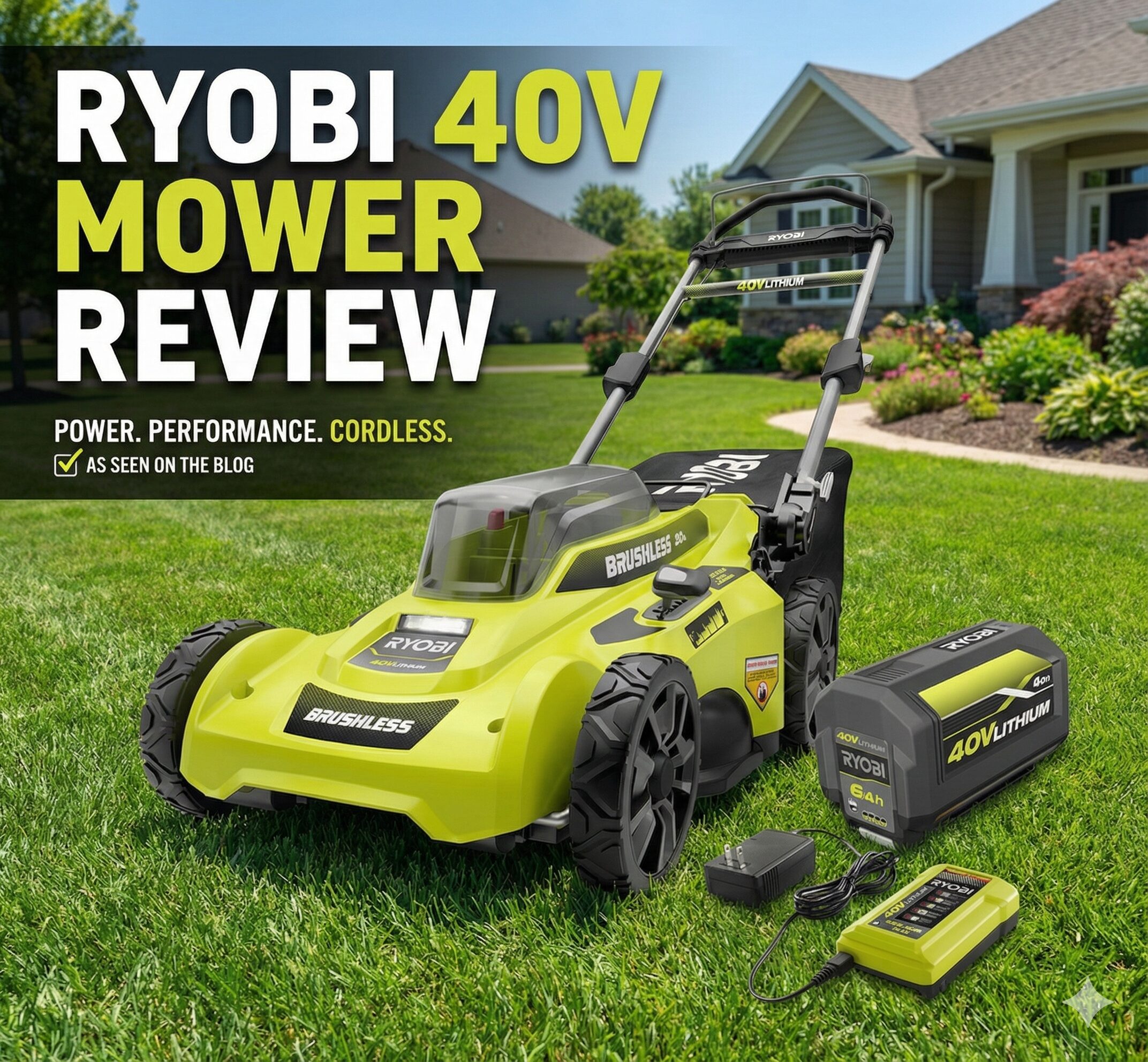
Ryobi 40V Review & Buyer’s Guide: Is It Time to Ditch Gas?
For decades, the smell of gasoline and the roar of engines defined lawn care. But the tide has turned. Battery technology has advanced to the point where electric tools are not just “good enough”—they are often better. Leading this charge for the average homeowner is Ryobi.
Ryobi’s 40V system is arguably the most pervasive battery platform in residential landscaping. Sold exclusively at Home Depot and major online retailers, it promises “Gas-Like Power” without the maintenance, fumes, or noise. But is a lime-green plastic mower really capable of replacing your trusty Honda gas engine?
In this comprehensive review and buyer’s guide, we are deep-diving into the Ryobi 40V ecosystem. We will test the flagship mower, the attachment-capable trimmer, and the whisper-quiet blower to help you decide if it’s time to cut the cord (and the gas can) for good.
The 40V Ecosystem: One Battery, 85+ Tools
The strongest selling point of Ryobi isn’t any single tool; it is the system. Ryobi 40V batteries are universal. The battery you slide into your lawn mower is the same one that powers your chainsaw, leaf blower, snow blower, and even portable power inverters.
This creates a “lock-in” effect that benefits the consumer. Once you own a couple of high-capacity 40V batteries, buying “tool-only” (without battery) versions of other equipment becomes significantly cheaper. Unlike professional-grade brands that cost a fortune, Ryobi hits the sweet spot of affordability and performance for the suburban homeowner.
Understanding “HP” (High Performance)
When shopping for Ryobi, you will see tools labeled “40V” and others labeled “40V HP.” Here is the difference:
- Standard 40V: Brushed motors. Good for lighter tasks and budget-conscious buyers.
- 40V HP (High Performance): Brushless motors and advanced electronics. These tools communicate with the battery to draw more amperage when under load (like hitting tall grass).
Recommendation: For primary tools like mowers and blowers, always spend the extra money for the HP / Brushless models. The durability and power difference is massive.

This is the mower that convinces die-hard gas users to switch. The “CrossCut” dual-blade system uses two blades stacked on top of each other to mince grass into fine particles, improving mulching performance significantly over single-blade electric mowers.
- Smart Trek Self-Propulsion: Adapts to your walking speed.
- Dual Battery Ports: Holds two batteries and switches automatically when one dies.
- CrossCut Multi-Blade System: Superior mulching and bagging.
- Single Point Height Adjustment: Change all 4 wheels with one lever.
Pros
- Excellent cut quality (comparable to gas).
- Run time is fantastic (up to 70 mins with 2x 6Ah batteries).
- Vertical storage saves garage space.
- Very quiet operation.
Cons
- Plastic deck can flex on very uneven terrain.
- Significantly more expensive than the base 20″ model.
- Self-propel thumb controls take getting used to.
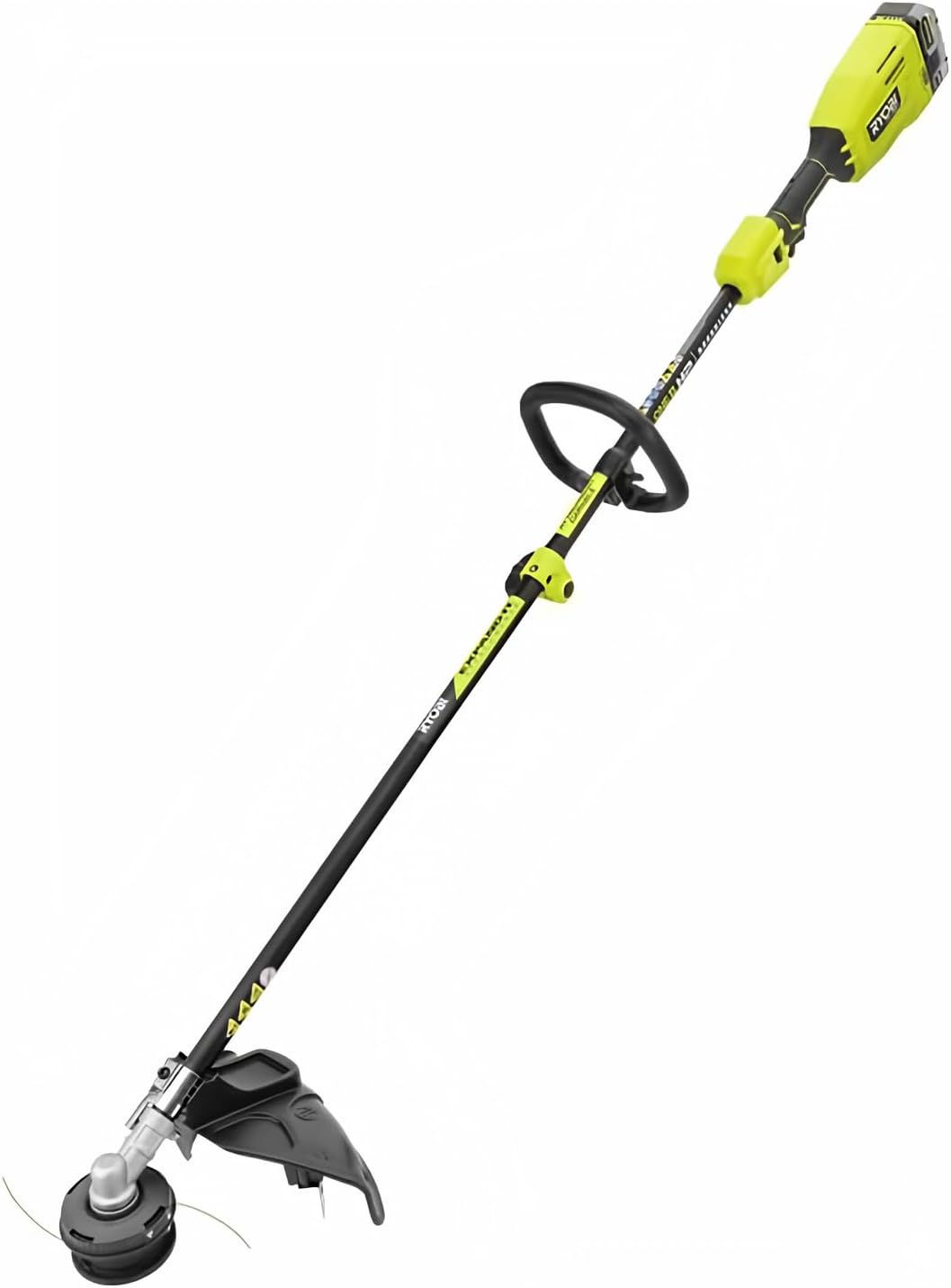
String trimmers can be heavy, but Ryobi solved this by using a carbon fiber shaft. This unit is part of the “Attachment Capable” family, meaning you can pull off the trimmer head and attach a blower, edger, cultivator, or pole saw.
- Attachment Capable: Works with Ryobi Expand-It universal attachments.
- Carbon Fiber Shaft: lighter and stronger than aluminum.
- Adjustable Cutting Width: 13″ for runtime or 15″ for max clearing.
- Reel-Easy+ Head: Loads line in under 60 seconds.
Pros
- Extreme versatility (one motor, many tools).
- Plenty of torque for thick weeds.
- Variable speed trigger for control around flower beds.
- Super easy to reload line.
Cons
- Can feel unbalanced with a heavy 4Ah battery attached.
- The guard is a bit small (wear pants to avoid debris).

Leaf blowers are notoriously loud, often annoying entire neighborhoods. Ryobi’s “Whisper Series” uses baffling technology to reduce noise to just 57 decibels, while still pushing a massive 730 CFM (Cubic Feet per Minute) of air.
- 730 CFM / 190 MPH: Moves wet leaves and debris easily.
- Whisper Technology: Engineered to be 85% quieter than gas.
- Turbo Button: Instant boost for stubborn debris.
- Cruise Control: Lock the speed so you don’t have to hold the trigger.
Pros
- Incredibly powerful (rivals handheld gas blowers).
- You can use it without hearing protection.
- Excellent ergonomics and balance.
- Includes speed tip for concentrated power.
Cons
- Eats batteries quickly on “Turbo” mode (approx 15-20 mins).
- Heavy with a battery installed.
Battery Guide: 4Ah vs 6Ah vs 7.5Ah
The “Ah” (Amp Hour) rating on a battery is like the size of the gas tank. Higher Ah means longer runtime.
| Battery Size | Best Used For | Approx Weight |
|---|---|---|
| 2.0 Ah | String Trimmers, Hedge Trimmers, Edgers | Lightweight |
| 4.0 Ah | Leaf Blowers, Chainsaws, Small Mowers | Standard |
| 6.0 Ah / 7.5 Ah | Lawn Mowers, Snow Blowers | Heavy |
Note: While you can put a massive 7.5Ah battery on a string trimmer, it will make the tool very heavy and unbalanced. Stick to 2Ah or 4Ah for handheld tools.
System-Wide Pros & Cons
Why Buy Ryobi 40V?
- Availability: Easy to find parts and batteries at Home Depot.
- Variety: Largest selection of 40V tools in the industry.
- Innovation: Features like Joystick driving (Zero Turn) and Whisper tech.
- Warranty: Standard 5-year tool warranty is excellent.
Potential Downsides
- Plastic Build: Not built for commercial/daily abuse like metal tools.
- Cost: HP batteries are expensive to replace ($150+).
- Charger Noise: The rapid chargers have loud cooling fans.