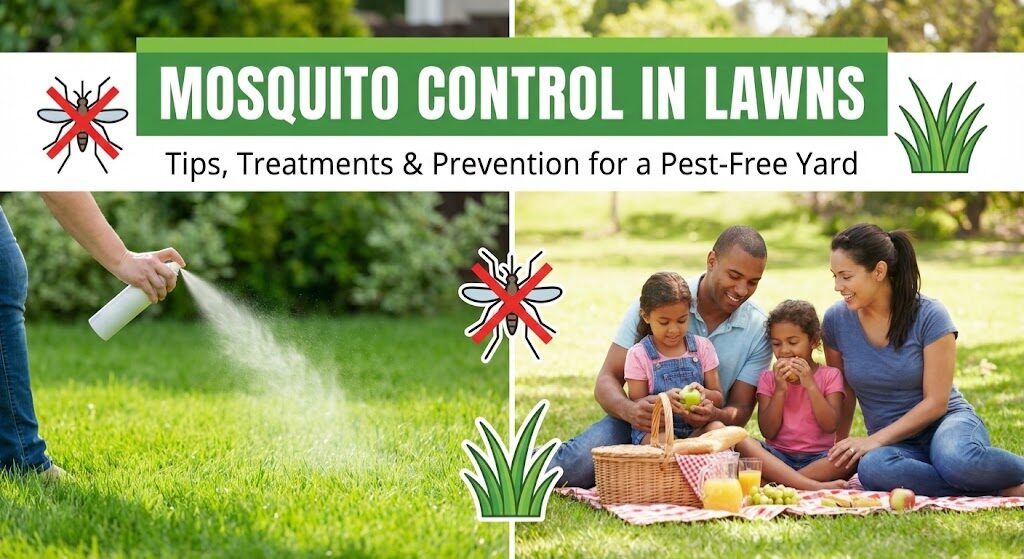
Reclaim Your Backyard: The Complete Guide to Mosquito Control in Lawns
Your lawn should be a sanctuary, not a feeding ground. Few things ruin a summer barbecue faster than the high-pitched whine of a mosquito. Beyond the annoyance, mosquitoes are vectors for dangerous diseases like West Nile Virus, Zika, and Heartworm (in pets).
Effective control isn’t about emptying a can of bug spray; it’s about a multi-layered defense strategy. This guide breaks down the science of elimination, from drainage to chemical barriers.
1. Know the Enemy: The Mosquito Lifecycle
To kill mosquitoes, you must understand where they come from. You cannot just treat the air; you must treat the source. The mosquito lifecycle has four stages, and the first three happen in water.
- Egg: Laid on water or damp soil. Can survive drying out for months.
- Larva: The “wriggler” stage. They live in water and breathe air at the surface.
- Pupa: The “tumbler” stage. They do not feed, but they transform into adults.
- Adult: The flying pest. Only the females bite (they need protein for eggs).
2. Source Reduction: Drain and Cover
Before buying any chemicals, you must eliminate breeding grounds. This is the most effective and eco-friendly method. Walk your property after a rainstorm and look for “cryptic” water sources.
Common Hidden Breeding Grounds:
- Clogged gutters (the #1 culprit).
- Birdbaths (change water weekly).
- Corrugated drain pipe extensions.
- Flower pot saucers.
- Old tires or tarps.
If your lawn itself is holding water and staying soggy for days, you have a drainage issue. Stagnant water on turf will drown grass roots and breed pests. Read our guide on How to Fix a Waterlogged Lawn to solve the root cause.
3. Broadcast Treatments: Creating a Barrier
Adult mosquitoes rest on the undersides of leaves during the heat of the day to avoid dehydration. To control them, you need to treat these resting sites.
Barrier Sprays involve coating shrubs, bushes, lower tree limbs, and the perimeter of your house with a residual insecticide. When the mosquito lands to rest, it absorbs the lethal dose.
✅ Synthetic Pyrethroids
- Active Ingredient: Bifenthrin, Permethrin.
- Pros: Lasts 21-30 days; very effective knockdown.
- Cons: Toxic to fish and bees if applied incorrectly.
🌱 Natural Oils
- Active Ingredient: Cedar, Garlic, Peppermint.
- Pros: Safe for kids/pets immediately; smells nice.
- Cons: Breaks down fast (reapply every 7-14 days).

Top Pro Choice: Talstar P (Bifenthrin)
The industry standard for barrier treatments. Odorless and dries clear.
Check Price on Amazon4. Larvicides: The “Dunk” Method
Sometimes you can’t drain the water (e.g., a decorative pond, a rain barrel, or a swampy ditch near your property). In this case, use a Larvicide.
The most common biological larvicide is Bti (Bacillus thuringiensis israelensis). This is a naturally occurring bacteria that infects mosquito larvae but is completely harmless to pets, birds, fish, and humans. It typically comes in “dunks” or bits.
5. Natural & Organic Options
If you prefer to avoid synthetic chemicals, you can still achieve control, but you must be more diligent with re-application. Essential oils work primarily by repelling mosquitoes (masking the CO2 scents we exhale) and by suffocating them on contact (soft-bodied insects).
Garlic Spray: Spraying liquid garlic extract on your lawn makes your yard smell like an Italian restaurant for about an hour, but to mosquitoes, the sulfur smell is unbearable for weeks.
For a broader approach to yard health without harsh chemicals, see our Lawn Care 101 guide.
6. Traps vs. Bug Zappers: Do They Work?
| Device | Mechanism | Effectiveness | Verdict |
|---|---|---|---|
| UV Bug Zapper | Attracts with light, electrocutes. | Very Low. Mosquitoes aren’t attracted to UV light. | ❌ Avoid (Kills beneficial moths) |
| CO2 Trap | Mimics human breath (Propane/CO2). | High. Draws them away from you. | ✅ Effective (Place away from patio) |
| Ultrasonic Plug-ins | Emits high-frequency sound. | Zero. Scientifically proven scams. | ❌ Avoid |
7. Landscaping Defense
Overgrown vegetation is a mosquito motel. Thick ivy, dense hedges, and tall grass provide the humidity mosquitoes need to survive the midday sun.
- Trim Hedges: Keep bushes pruned to allow airflow. Sunlight and wind are natural enemies of mosquitoes.
- Mow Regularly: While mosquitoes don’t nest in short grass, tall weeds provide shelter.
If you are struggling with pests in general, proper identification is key. Check our guide on Lawn Pest Control Methods: Identification & Treatment.
8. Equipment Guide: Foggers vs. Misters
How you apply the product is just as important as the product itself. For barrier treatments, you need tiny droplets that can flip leaves over and coat the underside.
- Pump Sprayer: Good for spot treatment, but hard to get good coverage inside dense bushes.
- Backpack Mist Blower: The gold standard. It uses air velocity to agitate the foliage, ensuring the chemical reaches deep into the shrubbery.
Considering an upgrade? Read our detailed comparison of Manual vs. Battery Backpack Sprayers.

Recommended: PetraTools Fogger
Create a fine mist that penetrates deep into foliage for maximum mosquito knockdown.
Check Price on Amazon9. Timing & Frequency
Mosquito control is seasonal. Timing your application ensures you kill the first generation before they reproduce.
- Spring (Temp > 50°F): Larvae begin hatching. Clean up winter debris and drain water.
- Summer: Peak season. Apply barrier sprays every 21-28 days (synthetic) or 14 days (natural).
- Fall: Don’t stop too early! The Culex mosquito (West Nile carrier) is most active in early autumn.
10. Protecting Pollinators (Bees & Butterflies)
Insecticides that kill mosquitoes can also kill bees. To be a responsible homeowner, follow these rules:
1. Never spray blooming flowers. If a bush is in flower, skip it.
2. Spray at dusk or dawn. Bees are active mid-day. Mosquitoes are active at dusk. Spray when the bees are back in the hive.
3. Use drift control. Don’t spray on windy days where chemicals can drift into flower beds.
11. DIY vs. Professional: The Cost Breakdown
Hiring a service usually costs $60-$90 per visit (approx. $500/season). Doing it yourself requires an upfront investment in equipment ($150-$300) and chemicals ($50), but the recurring cost drops to about $5 per application.
If you have a large property, DIY saves significant money. If you have a small yard or lack time, a pro service offers convenience. Just ensure they are licensed and ask about their pollinator protection policies.
The Bottom Line
You can win the war against mosquitoes. Start by draining standing water—it’s free and effective. Then, establish a barrier using a backpack sprayer and a quality product like Bifenthrin (for power) or Cedar Oil (for organic safety).
Consistent maintenance is key. Keep your lawn drained, your hedges trimmed, and your defenses up.
Frequently Asked Questions
Does spraying for mosquitoes kill ticks too?
Yes. Most pyrethroids used for mosquito control (like Bifenthrin and Permethrin) are highly effective against ticks, fleas, and gnats as well.
How long does a mosquito spray last?
Synthetic barrier sprays typically last 21 to 28 days, depending on rain and UV exposure. Natural garlic or oil sprays usually last 10 to 14 days.
Is it safe for my dog to go on the lawn after spraying?
Once the product has completely dried (usually 30-60 minutes), it is safe for pets and children. Never let them enter the area while the spray is still wet.
Why do mosquitoes bite me more than others?
Mosquitoes are attracted to CO2, heat, and body odor (lactic acid). Genetics, blood type (Type O is preferred), and even drinking beer can make you more attractive to them.
Do Citronella candles actually work?
Barely. They only work in the immediate plume of smoke. If the wind shifts, you are unprotected. A fan is actually more effective than a candle because mosquitoes are weak fliers.
Can I spray my grass directly?
You can, but it’s usually a waste of product. Mosquitoes rest in bushes, shrubs, and tall weeds, not typically in short turfgrass.
What is the best time of day to spray?
Dusk or dawn. This avoids burning plants in the midday sun and protects pollinators like bees and butterflies who are active during the day.
Will rain wash away the mosquito spray?
Once the product dries (binds to the leaf surface), it becomes rain-resistant. However, heavy, continuous rain over several days will reduce the longevity of the treatment.
Do bat houses help with mosquitoes?
While bats do eat mosquitoes, they prefer larger moths and beetles (more calories). Bat houses are great for the ecosystem but rarely solve a mosquito infestation on their own.
What diseases do mosquitoes carry in the US?
The most common are West Nile Virus, Eastern Equine Encephalitis (EEE), and St. Louis Encephalitis. In southern regions, Zika and Dengue are occasional risks.