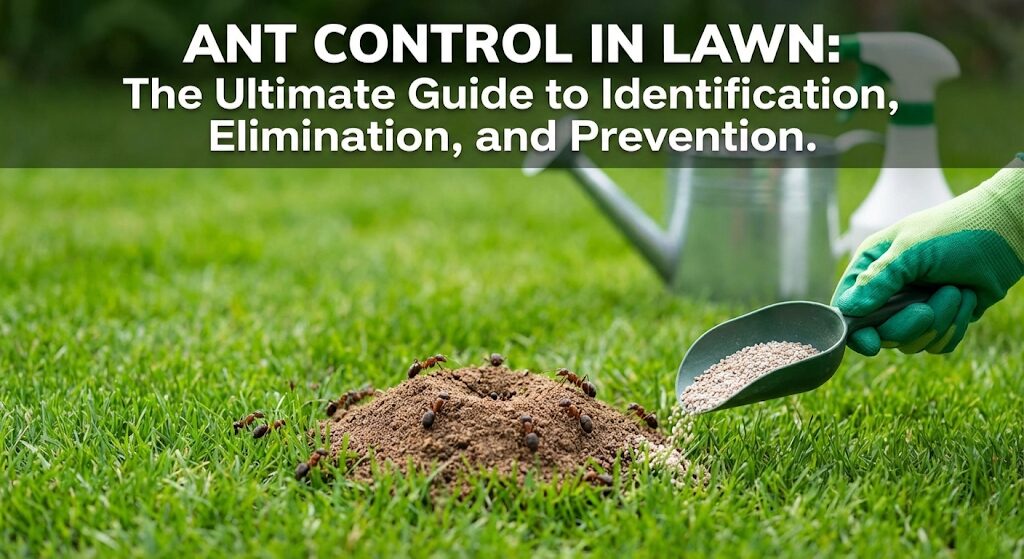
Ant Control in Lawn: The Ultimate Guide to Identification, Elimination, and Prevention
An ant-free lawn is possible. While ants are ecologically beneficial, an infestation can ruin the aesthetic of your turf, damage root systems, and turn a barefoot summer afternoon into a painful experience. This guide covers everything from identification to deep-root elimination.
1. Know Your Enemy: Ant Identification
Before you buy chemicals, you must identify what you are fighting. Different species require different bait sugars and proteins.
| Ant Species | Appearance | Lawn Impact | Danger Level |
|---|---|---|---|
| Red Imported Fire Ant | Reddish-brown, aggressive | Large mounds, unsightly dirt piles | High (Painful stings) |
| Carpenter Ant | Large, black | Rarely nests in soil; uses wood/mulch | Medium (Structure damage) |
| Pavement Ant | Small, brown/black | Dirt piles in driveway cracks/pavers | Low (Nuisance) |
| Field Ant | Varied colors, medium size | Can create large mounds that dull mowers | Low |
2. The Inspection Strategy: Finding the Queen
Spraying the ants you see on the surface is rarely effective. You are only killing the workers (about 10% of the colony). To solve the problem, you must kill the queen.
- Trace the Trails: Watch foraging ants carrying food. They will lead you directly to the nest entrance.
- Check the Perimeter: Ants often nest along concrete edges (driveways, walkways) because the stone retains heat.
- Inspect Weak Spots: Dry, sandy soil is easier for ants to excavate than healthy, dense turf.
3. Cultural Control: Habitat Modification
The best defense is a good offense. Ants thrive in stressed lawns. By improving the health of your grass, you make the environment less hospitable for nesting.
Thick turf makes it difficult for ants to build mounds. Ensure you are following a strict maintenance schedule. If you are unsure where to start, read our guide on Lawn Care 101: The Fundamentals. Raising your mowing height also shades the soil, keeping it cooler—something heat-loving ants hate.
4. Chemical Solutions: Granular vs. Liquid
There are two primary delivery methods for ant control. Choosing the right one depends on whether you are doing a “Broadcast” treatment or a “Spot” treatment.
🌱 Granular Insecticides
- Best for: Long-term prevention and broadcast coverage.
- Mechanism: Needs to be watered in to activate.
- Longevity: Lasts 3-6 months.
💦 Liquid Insecticides
- Best for: Immediate “knockdown” of visible mounds.
- Mechanism: Contact killer.
- Longevity: Short-term; rain washes it away.

Top Pick: Spectracide Ant Shield Granules
Excellent for broadcast spreading across the entire lawn.
Check Price on Amazon5. The Baiting Strategy: The Trojan Horse
For deep, established colonies, contact killers fail because they don’t reach the bottom of the nest. This is where baits shine.
Ants practice trophallaxis—they share food from their social stomach. When a worker brings toxic bait back to the colony, they feed it to the larvae and the queen. The colony collapses from the inside out.
6. Application Methods: Drop vs. Broadcast
When applying granular ant control, precision matters. If you have a severe infestation covering the whole yard, a Broadcast Spreader is efficient. However, if you are treating perimeter zones near flower beds, a Drop Spreader provides accuracy to prevent chemical runoff.
Unsure which tool you have? Check out our comparison of Drop vs. Broadcast Spreaders to ensure you are applying the product correctly.
7. The “Texas Two-Step” for Fire Ants
Fire ants are resilient. The most effective university-backed method for elimination is the “Two-Step Method”:
- Step 1 (Bait): Apply a broadcast bait (like Amdro) over the entire yard in the spring or fall. Let the workers forage for it.
- Step 2 (Drench): 7 to 10 days later, treat individual nuisance mounds with a liquid contact insecticide or drench.
8. Pet-Safe and Organic Options
If you have dogs or children playing on the lawn, you may want to avoid Bifenthrin or Permethrin. Here are effective organic alternatives:
- Diatomaceous Earth (DE): A powder made of fossilized algae. It cuts the exoskeleton of insects, dehydrating them. It must be kept dry to work.
- Beneficial Nematodes: Microscopic worms that hunt ant larvae in the soil.
- Essential Oils: Peppermint and Cedar oil are strong repellents.
9. Equipment Guide: Sprayers and Spreaders
For liquid drenches, a standard hand-pump sprayer can get tiring if you have a large property. A battery-powered backpack sprayer maintains constant pressure, allowing you to penetrate the mound deeply without pumping fatigue.
See our review on Manual vs. Battery Backpack Sprayers to decide if the upgrade is worth it for your lawn size.

Recommended: Chapin 4-Gallon Backpack Sprayer
Consistent pressure for effective mound drenching.
Check Price on Amazon10. Post-Treatment Care
If you used a granular contact killer (not bait), it usually needs water to release the active ingredient into the soil. However, don’t flood the lawn immediately, or you’ll wash the poison away from the target area.
Follow a light watering routine. For general lawn health advice to help grass recover after chemical stress, refer to the Best Watering Schedule for Your Lawn.
11. Prevention Calendar
| Season | Action |
|---|---|
| Early Spring | Scout for new mounds. Apply pre-emergent baits. |
| Summer | Spot treat mounds. Keep lawn watered to prevent dry soil cracking (which ants love). |
| Fall | Broadcast granular insecticide to prevent overwintering. |
| Winter | Monitor indoors; outdoor ants are dormant deep underground. |
Conclusion
Ant control in lawns is a battle of persistence, not a one-time event. By identifying the species, choosing the right delivery method (bait vs. contact), and maintaining a dense, healthy turf, you can reclaim your yard.
Frequently Asked Questions
Does mowing the lawn kill ants?
No. Mowing simply scatters the mound. The ants will rebuild, often moving the mound slightly over. It disturbs them but does not eliminate the colony or the queen.
Is boiling water effective?
Boiling water is about 60% effective on mounds. It will kill any ant it touches, including the queen if the water penetrates deep enough. However, it also kills the grass roots surrounding the mound.
Why do ants make mounds after rain?
Heavy rain saturates the soil. Ants build mounds upwards to get the eggs and larvae out of the waterlogged soil and into drier, warmer areas above ground.
How long does ant bait take to work?
Baits are slow-acting by design. It typically takes 24 to 72 hours for the workers to carry the bait back to the queen and for the colony to collapse. Be patient.
Can I use vinegar to kill ants in my lawn?
Vinegar kills ants on contact but does not have a residual effect. It is also a non-selective herbicide, meaning it will kill your grass along with the ants.
Are ants bad for my lawn?
Generally, no. They aerate the soil and eat other pests. They only become a problem when they build large unsightly mounds that smother grass or if they are aggressive species like Fire Ants.
What is the best time of day to apply ant killer?
Apply baits in the early morning or late evening when ants are actively foraging. Avoid applying in the heat of the day when ants are deep underground.
Will lawn fertilizer kill ants?
No, standard fertilizer does not kill ants. However, “Weed and Feed” products sometimes contain insecticides. Check the active ingredients label.