Seasonal Lawn Care Guide
The Best Time to Aerate Your Lawn: A Season-by-Season Guide
You mow, you water, and you fertilize, but your lawn still looks tired. Water pools on the surface after a rainstorm, and the grass feels hard as a rock under your feet. The problem likely isn’t what you’re putting on your lawn, but what’s happening under it.
Soil compaction is the silent killer of lawns. It chokes off oxygen, prevents water drainage, and stops nutrients from reaching the roots. The solution is aeration—punching holes in the soil to let it breathe. But timing is everything. Aerate at the wrong time, and you risk stressing your grass to the point of no return. Aerate at the right time, and you unlock a season of explosive growth.
In this guide, we will break down exactly when to aerate based on your specific grass type and climate, ensuring you get the lush, green results you’re chasing.
The Golden Rule: Know Your Grass Type
There is no single “best date” for everyone. The perfect time to aerate depends entirely on whether you have Cool-Season Grass or Warm-Season Grass.
The Principle: You should only aerate when your grass is in its peak growing phase. Aeration is a destructive process (you are tearing holes in the turf). If you do it while the grass is dormant, it cannot recover and weeds will take over the open holes. If you do it while it’s growing, the grass will race to fill the gaps, resulting in thicker turf.
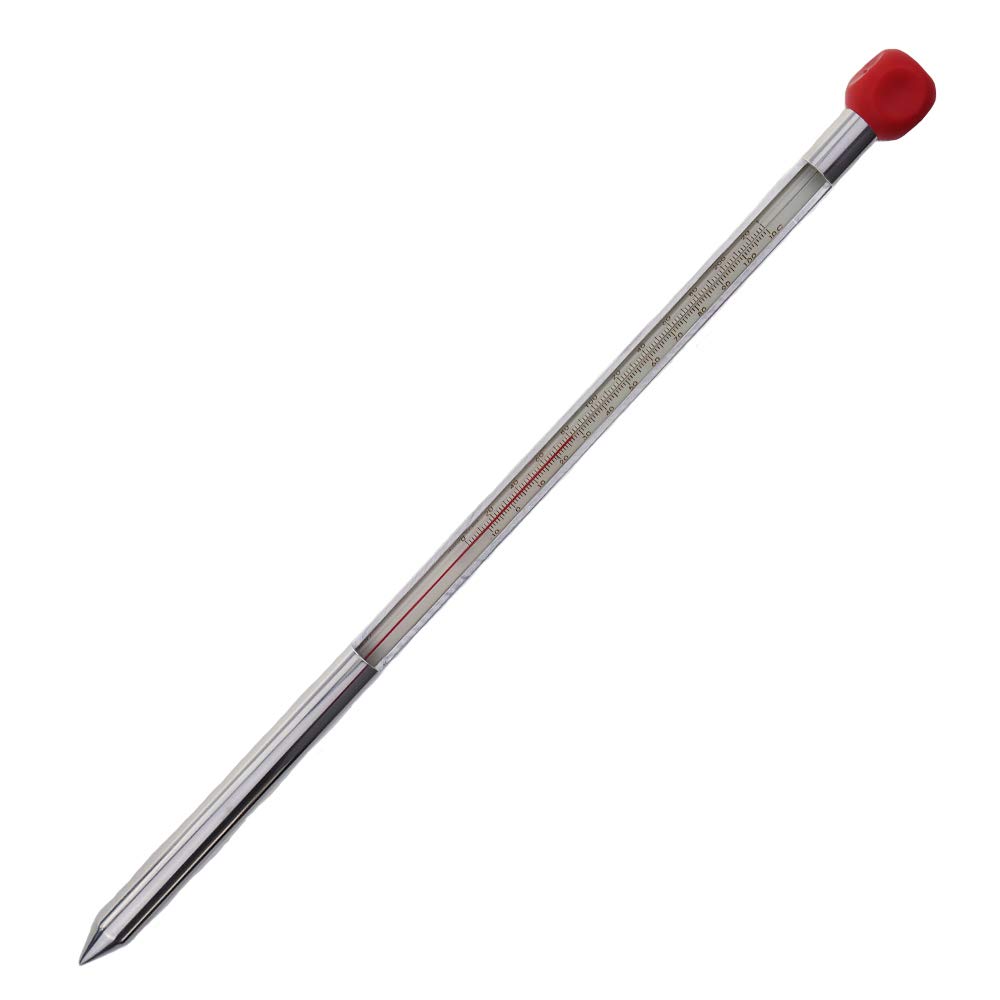
Stop guessing. Use a soil thermometer to determine if your soil temps are right for active grass growth before you aerate.
Check Price on AmazonBest Time for Cool-Season Grasses
Common Types: Kentucky Bluegrass, Tall Fescue, Perennial Ryegrass.
Region: Northern US, Midwest, Pacific Northwest.
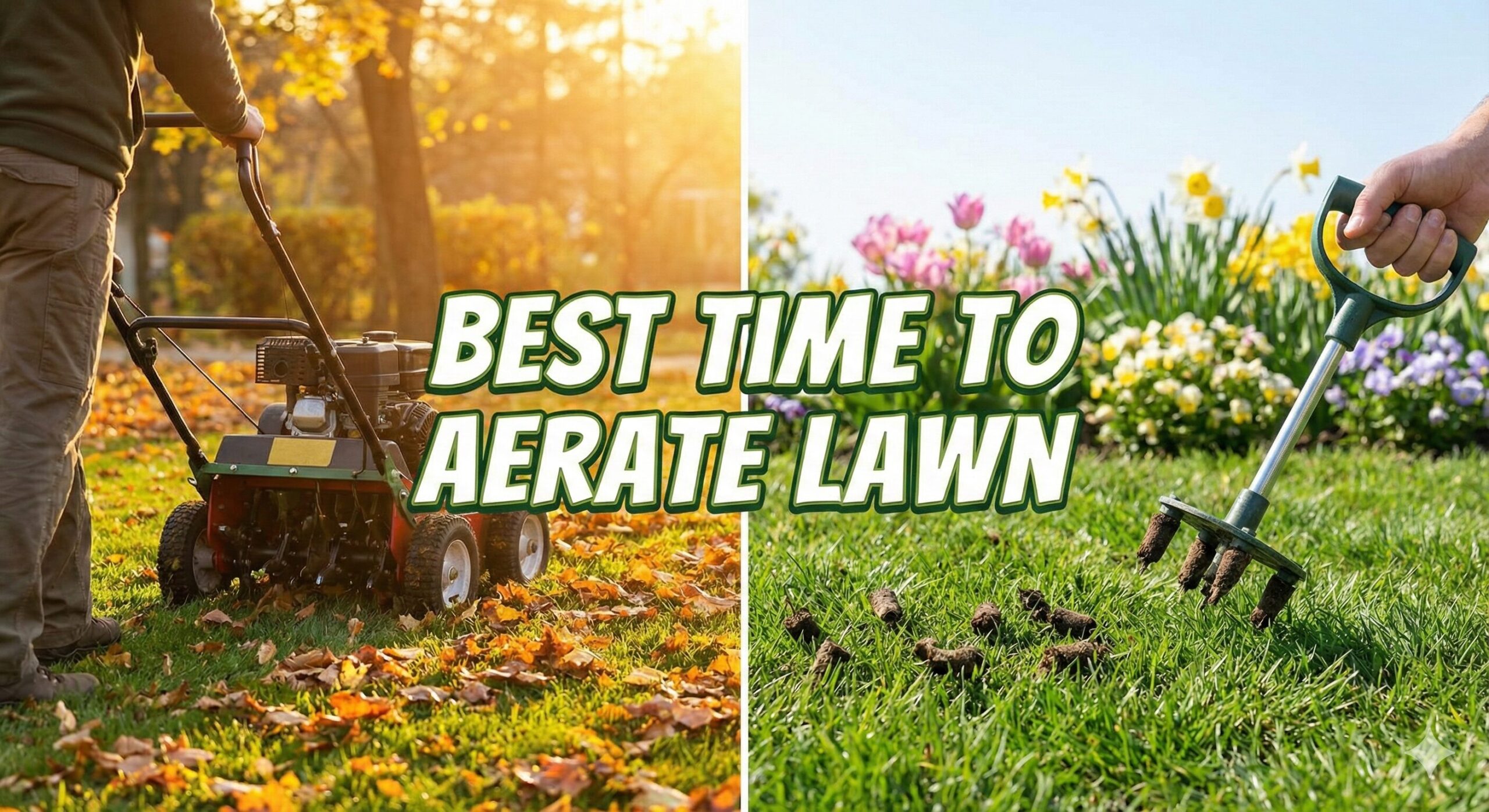
🏆 Primary Window: Early Fall (Late August – October)
This is the absolute best time. The summer heat has broken, soil temperatures are still warm enough for root growth, but weed pressure is low. It creates the perfect environment to pair aeration with overseeding.
Secondary Window: Early Spring (March – April)
You can aerate in the spring, but be careful. If you aerate too early, you create holes that are perfect homes for crabgrass seeds. If you choose spring, wait until you have mowed the lawn twice to ensure it is actively growing.

Got a large cool-season lawn? Don’t break your back. Hook this behind your rider mower in the Fall to aerate acres in minutes.
Check Price on AmazonBest Time for Warm-Season Grasses
Common Types: Bermuda, Zoysia, St. Augustine, Centipede, Bahia.
Region: Southern US, Transition Zone.
🏆 Primary Window: Late Spring / Early Summer (May – June)
Wait until the lawn is 100% green and you are mowing weekly. Warm-season grass loves heat. Aerating in early summer allows the grass to fill in the aeration holes aggressively.
Avoid: Do NOT aerate warm-season lawns in the fall or winter. The grass is going dormant and leaving open holes during winter exposes the roots to freezing temperatures, which can kill the turf.
5 Signs You Need to Aerate Now
Regardless of the calendar, your lawn will tell you when it’s suffocating. Look for these signs during the growing season:
- The Screwdriver Test: Take a screwdriver and try to push it into the soil. If you can’t push it down easily by hand, your soil is compacted.
- Puddling: Water sits on the surface after rain instead of soaking in. (Learn more about how to improve lawn drainage).
- Heavy Thatch: If the layer of dead grass between the green blades and soil is more than 1/2 inch thick.
- Thinning Grass: Areas that get heavy foot traffic (like paths or under swings) are thinning out.
- Shallow Roots: If you pull up a weed and it has almost no root system, the soil is too hard for deep growth.

Perfect for fixing small compacted spots or high-traffic areas without renting a machine. A must-have tool for spot-treatment.
Check Price on AmazonWhen You Should NEVER Aerate
Even if it is the right season, environmental conditions matter. Avoid aerating if:
- Drought: If the lawn is dry and stressed, aerating will stress it further.
- Bone Dry Soil: The machine won’t penetrate. Water the lawn deeply the day before aerating.
- Soaking Wet Soil: If it’s a mud pit, the aerator will get stuck and just punch muddy holes that seal shut. Ideally, the soil should be moist like a wrung-out sponge.
Post-Aeration: The Critical Window
You have punched thousands of holes in your lawn. Now what? This is the “golden hour” for lawn care.
- Leave the Plugs: Let the soil plugs sit on the surface. They will break down and return nutrients/microbes to the soil.
- Fertilize: Apply fertilizer immediately. It will fall into the holes and get straight to the root zone. (See: Liquid vs Granular Fertilizer).
- Overseed (Cool Season): If it’s fall, spread grass seed. The aeration holes provide perfect seed-to-soil contact.
- Topdress: Spread compost to add organic material into the soil profile. Learn how to add organic matter to your lawn effectively.

Feed your lawn immediately after aerating. The nutrients will bypass the surface crust and reach the roots for faster green-up.
Check Price on Amazon